Last summer, a facility manager overseeing a chemical plant in Houston called me in a panic. A bundle of critical control cables had slumped to the ground overnight. The "heavy-duty" zip ties he'd bought from a local supplier—specifically marked for outdoor use—had snapped at the locking heads. The culprit wasn't the tensile strength, but a chemical reaction between the fastener material and the airborne solvents they hadn't accounted for.
Replacing the ties cost a few hundred dollars, but the downtime for the inspection and re-routing? Tens of thousands. And it highlighted a common mistake: we tend to pick fastening solutions based on tensile strength alone, ignoring the silent killers like chemical corrosion, thermal cycling, and UV degradation. So, before you add a spool of ties to your cart for a critical job, here are the seven technical questions that separate a long-term fix from a future failure point.
We often generalize our environment. Saying "it's outdoors" isn't enough. Are you securing cables in a coastal substation where airborne salt spray creates a high chloride atmosphere? Or are you fastening fire-rated wraps inside a tunnel with constant high humidity and vehicle exhaust?
The first step is a genuine environmental audit. Don't just check the weather; analyze the microclimate. Is there potential for impact from rocks or debris? What is the ambient operating temperature at the bundle's surface, not just the air temperature? A tie that performs perfectly in a cold storage warehouse might become brittle and fracture on a sun-baked rooftop conduit, even if the temperature is technically "within range."
This is where the material science meets the budget. Most industrial fasteners are manufactured from one of two austenitic stainless steel grades. The difference often comes down to a single element: Molybdenum.
Grade 304: Excellent for general indoor/outdoor use, mild atmospheric conditions, and food processing areas. It offers good oxidation resistance but is vulnerable to pitting in chloride-heavy environments.
Grade 316: Contains 2-3% Molybdenum, which dramatically increases resistance to chlorides (salt, de-icing fluids). If you are within 5 miles of a coast, or dealing with any chemical that releases chloride ions, skipping 316 is a gamble.
Always look for documentation proving the melt source. Inferior raw materials can fail even if stamped with the correct grade. For infrastructure projects, requesting Material Test Reports (MTRs) isn't overkill; it's standard protocol. If you are navigating the gray area between these grades, finding a durable solution that offers the chemical resistance of 316 without an exorbitant price jump is key.
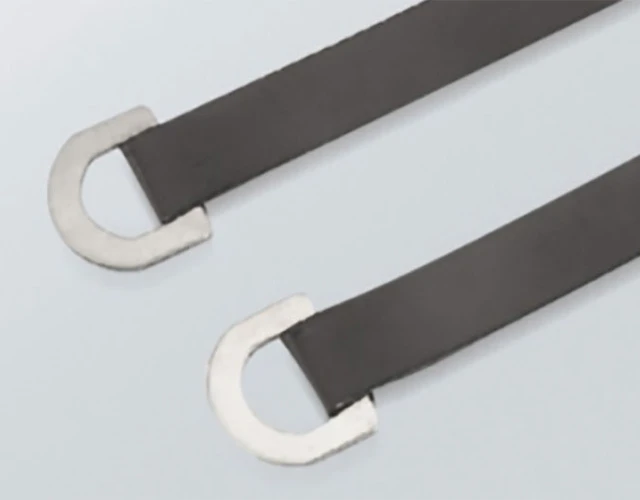
Raw stainless steel is highly conductive and has sharp edges. If you're bundling high-voltage cables or delicate fiber optics, a polyester coated stainless fastener becomes essential. The coating acts as a dielectric barrier and a cushion.
But not all coatings are equal. There is a significant gap in performance between a simple PVC sleeve and an engineered polyester coating. PVC can harden and crack in cold weather or become sticky in high heat, and it's generally not UV-stabilized for long outdoor life. A UV-stabilized, halogen-free polyester coating offers better abrasion resistance and temperature stability (often from -40°F to 302°F).
I recently ran a small, unscientific test by leaving two coated samples on a dashboard for a month. The PVC-coated sample had a sticky surface and had slightly yellowed. The polyester-coated sample looked new.
This was the Houston manager's downfall. A tie can withstand rain, but not the specific cocktail of petrochemicals, cleaning agents, or ozone it's exposed to. Before you search for a specific coated grade for aggressive environments, you need to dig into a chemical resistance chart.
Focus on the coating's resistance, not just the metal's. A standard Nylon 11 or 12 coating offers good resistance to oils and fuels, but ECTFE (Halar) might be needed for strong mineral acids. If you're bundling pipes on a chemical skid, ask for a detailed breakdown of the coating's performance against specific agents like Xylene, Sulfuric Acid (specific concentration), or Hydrogen Sulfide. Generic approvals are meaningless here. Look for ISO 9227 salt spray test data to verify longevity claims rather than accepting "corrosion-proof" labels at face value.
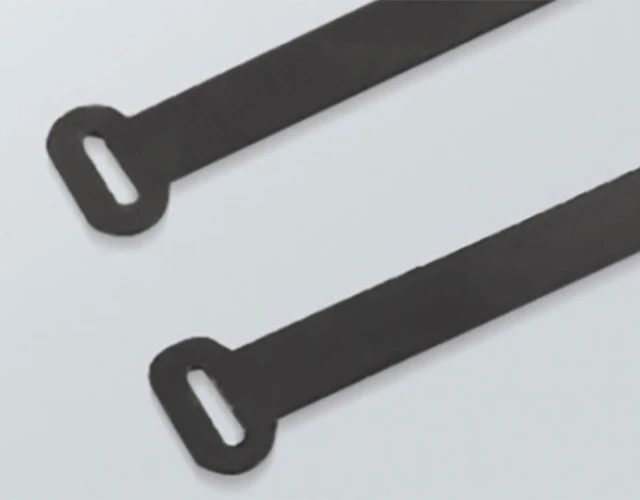
The band might hold thousands of pounds, but the locking head is the number one mechanical failure point. A poorly designed "ball-lock" mechanism can slip under vibration, or the retaining ball itself can corrode faster than the band, causing a catastrophic failure long before the band loses its integrity.
Inspect the locking geometry. A fully enclosed, self-locking head design protects the locking mechanism from dust and grit. The tooth profile matters, too: deep, rolled threads provide a larger contact surface area than shallow, cut threads, significantly reducing the chance of slippage during thermal expansion and contraction. High-vibration settings like rail or heavy machinery absolutely require a double-lock or self-locking mechanism.
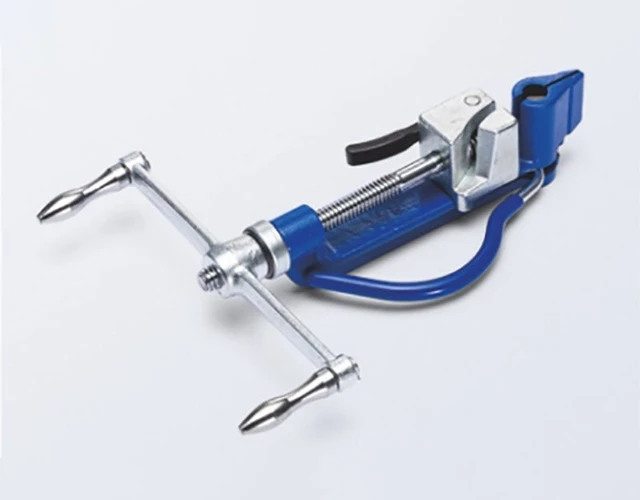
A common frustration: you buy premium ties, but install them with pliers and break the heads or twist the bands. This creates inconsistent tension and micro-fractures. For jobs requiring more than a dozen ties, a manual tensioning tool is not a luxury; it's a precision instrument.
A correctly calibrated installation tool ensures you're hitting the manufacturer's specified installation tension exactly—tight enough to secure the bundle without cold-flowing the cable insulation. If you’re making the switch from plastic to metal fastening, it might be time to click here to view the specs on compatible tooling. In the long run, proper tooling actually reduces waste from failed installations.
It's easy to compare prices on a spreadsheet, but the unit cost of the tie itself is a tiny fraction of its Total Cost of Ownership (TCO). A tie that costs 30 cents more per unit but prevents a $5,000 service call 5 years later has essentially returned 1,666,500% on that investment.
When calculating TCO, factor in:
Installation Time: Does the tie design allow for quick threading?
Inspection Cycles: Will this require frequent re-tightening?
Risk of Failure: What is the financial impact of 1 hour of downtime this tie is preventing?
If you need a reliable starting point for a demanding specification, it’s often helpful to explore the ETL coated series—a line engineered specifically to solve the coating-failure and locking-degradation puzzles we've discussed.
By working through these seven questions, you shift the conversation from "what's the cheapest option" to "what's the safest, longest-lasting specification for this specific task." In high-stakes environments where failure isn't just expensive but dangerous, that’s the only conversation worth having.


 中文
中文 English
 Pусский
 Français
 Español