Choosing the right fastening solution for harsh environments often feels like a gamble. You need something strong, durable, and resistant to the elements, but the specific material grade can be a confusing maze. A seemingly minor difference in chemical composition can mean the difference between a decade of reliable service and premature, costly failure. This choice is especially critical when your application involves more than just indoor use.
The core of this dilemma often boils down to a battle between two popular austenitic alloys: 304 and 316. While they may look identical to the naked eye, their performance under fire (and water, and chemicals) is where they diverge. Understanding these distinctions is the first step toward a foolproof, long-term fastening strategy.
The fundamental difference is on the periodic table. Type 304 is an alloy typically composed of 18% chromium and 8% nickel. This combination provides excellent corrosion resistance in a wide range of atmospheric environments and many corrosive media.
Type 316, however, takes it a step further. It adds 2-3% molybdenum to the mix. This single element is a game-changer. Molybdenum significantly enhances the alloy’s resistance to pitting and crevice corrosion in high-chloride environments. In plain English, if your application is anywhere near saltwater, de-icing salts, or certain chemical processing agents, the presence of molybdenum isn’t just a feature—it’s a necessity.
To make this tangible, let’s break down how each grade performs across critical decision-making dimensions. This isn’t about lab results; it’s about what happens on your site, in your facility, or out at sea.
| Performance Dimension | 304 Alloy | 316 Alloy | The Takeaway |
| Chloride Resistance | Moderate. Suitable for freshwater, mild atmospheres, and most food processing environments. | Superior. Engineered to withstand continuous exposure to salt spray, marine atmospheres, and brine solutions. | For coastal or marine applications, 304 is a risk; 316 is a requirement. |
| Chemical Resistance | Performs well against many organic chemicals, nitric acid, and some alkalis. | Stands strong against sulfuric acid compounds, chlorides, bromides, and iodides, making it ideal for chemical plants. | The wider chemical defense of 316 prevents catastrophic tie failure in aggressive processing environments. |
| High-Temperature Strength | Good scaling resistance in intermittent service up to 870°C (1600°F). | Slightly higher creep and stress-rupture strengths at elevated temperatures compared to 304. | Both are strong, but 316 holds a marginal edge in long-term, high-heat structural integrity. |
| Cost Efficiency | The more economical choice, offering an optimal strength-to-cost ratio for standard applications. | A premium product with a higher upfront cost that delivers long-term value by preventing replacement costs in harsh settings. | The “cheaper” option is the one you don’t have to replace twice. |
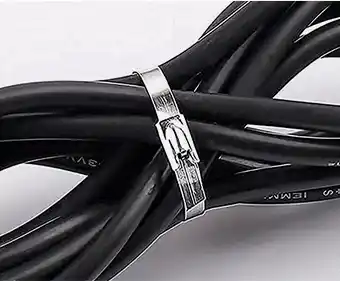
The price difference between a 304 and a 316 fastening solution is real, but it pales in comparison to the cost of a systemic failure. In a marine engine room or a coastal substation, choosing the standard grade can lead to chloride-induced stress corrosion cracking. A fastener that looks fine externally can suddenly snap, leaving critical cables unsecured. This is a safety hazard and a maintenance nightmare.
If your project involves securing wiring on a rooftop exposed to acid rain, bundling pipes in a chemical plant, or managing rigging on an offshore platform, the specification is clear. For these demanding environments, you need a solution with that critical 2% molybdenum content to ensure long-term reliability.
When you’re weighing long-term durability against initial outlay, it’s helpful to explore specialized metal fastening options that prioritize the right alloy for the job. Understanding the full spectrum of available configurations ensures you’re not just buying a product but an insurance policy against environmental degradation.
Selecting the right material doesn’t need to be complex. Here’s a simple, scenario-based guide:
Choose 304 When: Your project is indoors, part of a standard electrical installation, used in general manufacturing, or in a food processing area where equipment is washed down without harsh chlorides. It offers exceptional strength for typical commercial and industrial tasks.
Choose 316 When: The application is within 5 miles of a coastline, in a swimming pool complex, on a vessel, inside a chemical processing plant, or wherever prolonged contact with chlorides, solvents, and severe industrial pollutants is expected.
Ultimately, the longevity of your installation isn’t just about picking between 304 and 316. It’s about the entire system’s integrity. The locking mechanism, the tensile strength rating, and the consistency of the coating (or the raw material quality) are equally vital. A high-grade alloy with a poorly engineered ball-lock mechanism is still a weak link in your chain.
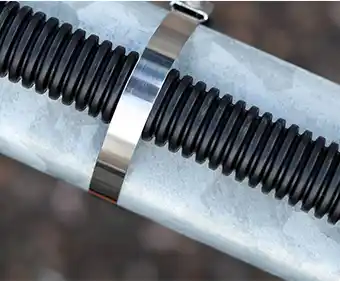
Your choice in fastening technology is a direct investment in operational reliability and safety. By moving beyond a generic selection and matching the material properties precisely to the environmental challenge, you engineer out the risk of premature failure. This proactive approach saves not just money, but also the invaluable asset of peace of mind.
If you’re looking to specify components with confidence, you might click here to learn more about professional-grade fastening solutions that offer the transparency and technical data you need to make a fully informed decision. After all, the best installations are the ones you can forget about because they just keep performing.
When your project demands a solution that comes with clear technical specifications and reliable supply, it’s worth looking at a provider like ETL. Their range of bundling and securing products is engineered for the nuanced demands we’ve discussed, helping you move from a generic choice to a precision-specified one. You can review their full range of heavy-duty fastening systems to find a match for your exact operating environment.


 中文
中文 English
 Pусский
 Français
 Español