When selecting cable ties for high-temperature industrial environments, the choice between naked (uncoated) and coated stainless steel ties often determines long-term fastening reliability. The short answer: naked stainless steel cable ties are the preferred choice when continuous operating temperatures exceed the thermal limits of polymer coatings — typically above 150°C for polyester coatings and above 120°C for PVC coatings. Uncoated stainless steel ties maintain their mechanical integrity across a much wider temperature range, from sub-zero conditions up to 500°C or higher, depending on the grade. This article explains the temperature limits, application fit, and selection criteria to help you determine when naked stainless steel ties are the right specification for your project.
The operating temperature range of a stainless steel cable tie depends primarily on two factors: the base material grade and the presence or absence of a coating.
Stainless steel itself is inherently heat-resistant. The most common grades used in cable tie manufacturing — 304 and 316 stainless steel — can withstand continuous operating temperatures far beyond what most polymer-based fastening solutions can tolerate.
| Material Grade | Typical Continuous Operating Temperature | Key Properties |
|---|---|---|
| 304 Stainless Steel | -80°C to +500°C (-112°F to +932°F) | Good corrosion resistance, cost-effective for general industrial use |
| 316 Stainless Steel | -80°C to +500°C (-112°F to +932°F) | Superior corrosion resistance, ideal for marine and chemical environments |
| 316L Stainless Steel | -80°C to +500°C | Low-carbon variant with enhanced weldability and corrosion resistance |
Note: Temperature ranges are based on industry-standard specifications. Actual performance may vary by manufacturer, product design, and specific application conditions.

While coatings such as polyester, PVC, or epoxy resin provide benefits like abrasion protection and insulation against galvanic corrosion, they introduce a critical limitation: the coating degrades at high temperatures long before the stainless steel base material fails.
Polyester coatings typically begin to soften or degrade above 150°C
PVC coatings have even lower thermal limits, generally around 120°C
Epoxy resin coatings may offer moderate heat resistance but still fall well short of bare stainless steel capabilities
When the operating environment exceeds these coating temperature limits, the coating may melt, crack, or peel — compromising both the protective function and the mechanical integrity of the tie. In such cases, naked stainless steel ties are not just an option; they are a necessity.
The decision to use naked (uncoated) stainless steel cable ties should be based on a clear assessment of the operating environment. Here are the primary scenarios where uncoated ties are the correct choice:
If your application involves continuous exposure to temperatures above 150°C, naked stainless steel ties are generally the appropriate specification. Common examples include:
Exhaust system bundling — temperatures can exceed 300°C
Engine compartment wiring — heat from engines and turbos
Industrial furnace and kiln applications
Heat treatment equipment
Foundry and metal processing facilities
Applications that cycle between extreme cold and extreme heat can cause coatings to expand and contract at different rates than the underlying stainless steel, leading to delamination, cracking, or loss of adhesion. Naked ties eliminate this risk entirely.
In environments where fire resistance is critical — such as petrochemical plants, power generation facilities, and offshore platforms — uncoated stainless steel ties offer inherent non-flammability. Coatings, by contrast, may contribute to smoke or toxic fume emissions in a fire event.
In food processing, pharmaceutical manufacturing, and other clean environments, coating degradation or flaking can introduce contamination risks. Naked stainless steel ties provide a clean, non-shedding solution.
While many coatings offer UV resistance, prolonged exposure to direct sunlight can still cause gradual degradation. Naked stainless steel ties are inherently UV-resistant and maintain their properties indefinitely under solar exposure.
The following comparison table summarizes the key trade-offs to consider when choosing between naked and coated stainless steel cable ties:
| Consideration | Naked (Uncoated) Stainless Steel Ties | Coated Stainless Steel Ties |
|---|---|---|
| Maximum Continuous Temperature | Up to 500°C (932°F) | Typically ≤ 150°C (302°F) |
| Minimum Temperature | Down to -80°C (-112°F) | Dependent on coating; may become brittle |
| Corrosion Resistance | Intrinsic to stainless steel grade | Enhanced by coating barrier |
| Galvanic Corrosion Protection | Not provided — direct metal contact possible | Coating acts as insulator |
| Abrasion Protection | Not provided | Coating protects cable insulation |
| UV Resistance | Excellent — no degradation | Variable — depends on coating type |
| Fire Performance | Non-flammable | Coating may contribute to smoke |
| Cost | Generally lower than coated variants | Higher due to additional processing |
| Installation | May require more care to avoid sharp edges | Easier on sensitive cable jackets |
Naked stainless steel cable ties are widely used across industries where heat, corrosion, or fire resistance are paramount:
Industrial machine wiring — securing cables in high-temperature machinery
Indoor and outdoor conduit — permanent fastening in exposed environments
Street lighting and security camera mounting — outdoor UV and weather exposure
Outdoor pipe fastening — securing pipes in industrial facilities
Safety fence post securing — permanent outdoor fastening
Marine and offshore installations — saltwater corrosion resistance
Petrochemical and chemical processing plants
Power generation facilities — including nuclear and thermal plants
Before specifying naked stainless steel cable ties for your application, verify the following:
What temperature can naked stainless steel cable ties withstand?
Naked stainless steel cable ties can typically withstand continuous operating temperatures from -80°C to +500°C (-112°F to +932°F), depending on the grade. This range makes them suitable for virtually all industrial high-temperature applications.
When should I choose coated over naked stainless steel cable ties?
Choose coated ties when the operating temperature consistently stays below 150°C and you need abrasion protection for cable insulation, insulation against galvanic corrosion between dissimilar metals, or improved handling during installation.
Can I use naked stainless steel cable ties in marine environments?
Yes, but you should specify 316 or 316L stainless steel rather than 304. The molybdenum content in 316 grade provides superior resistance to chloride-induced corrosion, which is critical in marine and coastal environments.
Do naked stainless steel cable ties require special installation tools?
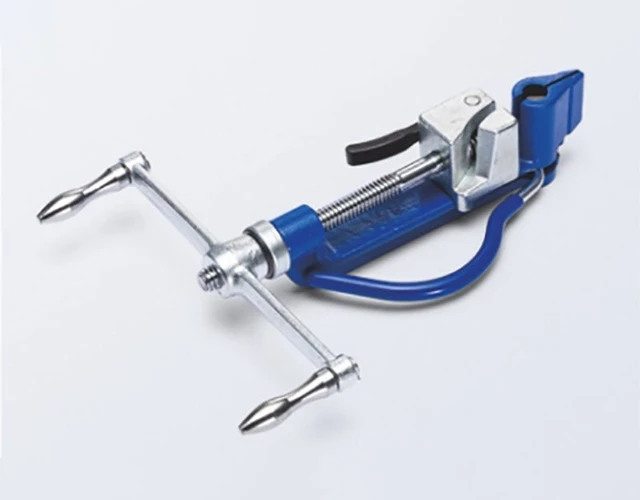
Yes. Stainless steel cable ties typically require professional tensioning tools to achieve the correct installation tension without damaging the tie or the bundle. Over-tightening can cause structural damage to the tie.
Are naked stainless steel cable ties fire-resistant?
Yes. Stainless steel is non-flammable and does not contribute to fire spread or smoke emission. This makes naked ties the preferred choice for fire-safety-critical applications such as power plants, petrochemical facilities, and offshore platforms.
The choice between naked and coated stainless steel cable ties comes down to one fundamental question: does your application involve sustained temperatures above the thermal limit of the coating? If the answer is yes — or if fire resistance, UV exposure, or contamination risk is a primary concern — naked stainless steel cable ties are the appropriate specification.
For applications where temperatures remain below 150°C and abrasion or galvanic corrosion protection is needed, coated ties may be the better choice. The key is to evaluate the full operating environment, not just the peak temperature, and select the solution that provides long-term reliability without compromise.
When you are ready to review the available configurations, compare related models, or discuss your material and production requirements with a technical expert, explore the naked stainless steel cable ties product category or contact the ETL team for application-specific guidance.
Review the available configurations → Naked Stainless Steel Cable Ties


 中文
中文 English
 Pусский
 Français
 Español