When a maintenance engineer at a coastal petrochemical plant discovered that his cable fasteners had begun showing rust spots after just 14 months of service, he faced a question that plagues many industrial professionals: was he using the wrong grade of metal tie for his environment?
The answer, it turned out, lay in a single alloying element that accounts for less than three percent of the material‘s composition—and in a fundamental misunderstanding about where “stainless” ends and real-world conditions begin. This article breaks down the practical differences between 304 and 316 grade fasteners, so you can make the right call before installation day.
Both 304 and 316 belong to the austenitic family of stainless steels and share the same basic building blocks: chromium and nickel. The defining distinction is that 316 contains 2–3% molybdenum, while 304 contains none. That small addition carries an outsized impact.
Molybdenum dramatically improves resistance to pitting and crevice corrosion—the two most common failure modes in chloride-rich environments. Engineers quantify this using the Pitting Resistance Equivalent Number (PREN), calculated as PREN = %Cr + 3.3 × %Mo + 16 × %N. Type 304 scores approximately 18–20 on this scale; Type 316 reaches roughly 24–28. The 3.3× multiplier on molybdenum explains why a seemingly minor change in chemistry translates into a decisive performance gap in the field.
To understand which fastener grade you need, you first need to understand what‘s attacking your metal. ISO 9223:2012 classifies atmospheric corrosivity into six tiers—from C1 (very low, e.g., dry indoor offices) through C5 (very high, industrial and coastal areas) to CX (extreme, offshore and heavy industrial environments).
Rural areas, small towns, indoor offices and schools. In these settings, 304 fasteners generally deliver more than adequate performance over their entire service life.
Urban areas with medium pollution, coastal areas with low chloride deposition, and food processing plants. Grade 304 is usually sufficient here, though some plant engineers in coastal C3 zones opt for 316 as a safety margin.
Industrial areas, polluted urban zones, coastal areas, and regions with significant de-icing salt usage. At C4 and above, 316 becomes the standard recommendation. In C5 environments, some specifications even require A4 or A5 group stainless steels.
Offshore platforms, marine structures with salt spray contact, and heavy chemical processing facilities. Here, even standard 316 may need supplementation—engineers sometimes turn to duplex or super-austenitic grades for these applications.
| Criteria | 304 (18/8) | 316 (Marine Grade) |
|---|---|---|
| Composition | ~18% Cr, ~8% Ni | ~16% Cr, ~10% Ni, 2–3% Mo |
| PREN (Corrosion Resistance) | ~18–20 | ~24–28 |
| Chloride Resistance | Moderate: suitable for freshwater and mild outdoor exposure | Good: withstands saltwater, chemical process fluids, and de-icing salts |
| Typical Service Temperature | -80°C to +538°C | -80°C to +538°C |
| Cost Premium | Baseline | Approximately 15–25% higher |
| Best Applications | Indoor cable management, general factory wiring, outdoor municipal use in non-coastal areas | Coastal installations, offshore platforms, chemical plants, shipboard fastening, road salt environments |
| Limitations | Vulnerable to pitting when chlorides exceed ~200 ppm at elevated temperatures | Not immune to warm seawater crevice corrosion; above ~60°C, stress corrosion cracking risk increases |
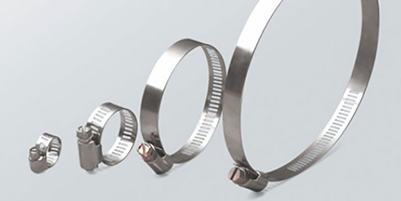
If your project involves indoor cable management, factory floor wiring, or general-purpose fastening away from coastal or chemical exposure, 304 fasteners provide excellent corrosion resistance at a more economical price point. They resist atmospheric moisture, mild chemicals, and UV radiation effectively, and they offer high tensile strength—typically up to 890 N for standard-width ties.
For municipal street lighting, warehouse electrical installations, and food processing facilities located inland, 304 represents the most cost-effective balance of performance and price. There‘s no need to pay a premium for capabilities you won’t use.
In one documented case at a precious metals refinery complex, even 304 fasteners rusted after extended exposure to the facility‘s highly corrosive atmosphere. The plant switched to 316-grade straps, which are expected to last up to five years—a dramatic improvement over the six-month lifespan of the plastic ties they had used previously.
316 is the right call when any of the following applies:
Coastal proximity: Salt spray and marine atmospheres contain chloride levels that 304 cannot reliably withstand. For offshore platforms and subsea equipment, 316 is the minimum acceptable grade.
Chemical processing: Environments handling sulfuric acid, formic acid, or acetic acid demand the molybdenum-enhanced formulation of 316.
De-icing salt exposure: Roadside installations, bridge cable management, and tunnel infrastructure in cold climates face aggressive chloride attack from road salts.
Desalination and wastewater treatment: These facilities operate with chloride concentrations that rapidly compromise 304.
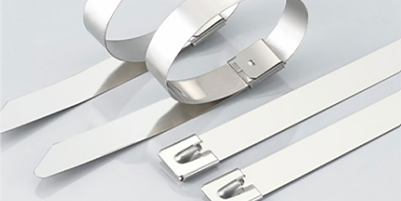
For professionals facing these conditions and seeking fasteners specifically designed for high-chloride exposure, a detailed look at real-world applications can help narrow the selection. See how different environments demand different fastening solutions.
Even the correct material selection won‘t save a poorly installed fastener. Two critical practices make the difference between a decade of reliable service and premature failure:
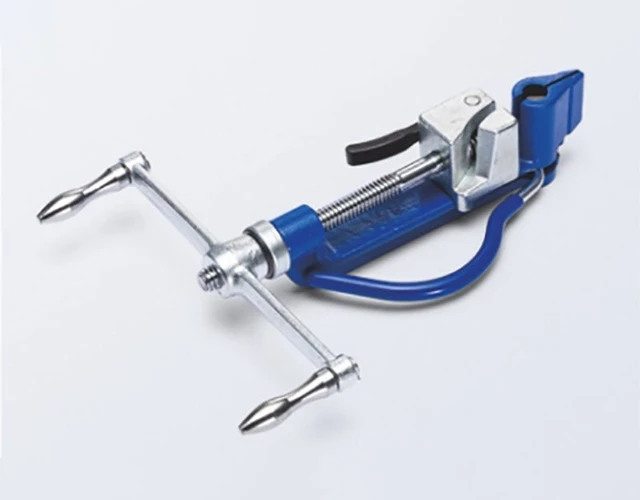
1. Use dedicated cutting tools. Standard pliers or scissors leave sharp, jagged edges that not only pose safety hazards but can also initiate corrosion by disrupting the passive chromium oxide layer. Purpose-built tensioning and cutting tools produce clean, smooth cuts that preserve the material’s self-healing corrosion barrier.
2. Control tightening force. Over-tightening can bend, crack, or deform the fastener—especially in cold-temperature installations where material ductility decreases. Tighten until the bundle is secure without visible deformation of the tie body. For installations subject to vibration (e.g., rotating equipment, shipboard systems), a properly tensioned tie that remains snug without being overstressed will outlast one installed to maximum torque.
3. Inspect on a schedule. In aggressive environments, visual inspections every three to six months help catch early signs of discoloration, loosening, or localized corrosion before they escalate into structural failures.
If you‘re planning a large-scale installation or working in conditions where failure carries significant operational risk, it’s worth investing time in understanding proper fastening techniques. Get guidance on matching tools and methods to your application.
For environments that push even 316 to its limits—or for applications where electrical insulation is needed alongside corrosion protection—coated options provide an additional defense layer. Black polyester coatings, for instance, add resistance to UV radiation, fungi, mold, and a broader range of chemicals while also reducing the risk of galvanic corrosion when fastening dissimilar metals.
PVC and nylon 11/12 coatings offer further specialization: nylon coatings resist petrochemical exposure well, while PVC provides good electrical insulation properties. The trade-off is that coatings can reduce the maximum service temperature and may wear over time under abrasive conditions.
If you‘re still unsure which grade fits your project, run through this checklist:
Measure your chloride exposure: Are you within 5 km of a coastline? Do you use de-icing salts? Are process chemicals containing halides present? Any “yes” points strongly toward 316.
Check your temperature range: Both grades handle -80°C to over 500°C, but elevated temperatures accelerate chloride attack. Above 50–60°C in chloride-containing environments, 304 becomes vulnerable.
Calculate the cost of failure: If a fastener failure means a dropped cable in a public space, a production shutdown, or a safety hazard, the 15–25% premium for 316 is negligible compared to the consequences of failure.
Consult ISO 9223 for your location: Classify your site‘s corrosivity category and match it against the recommended alloy grades.
For many general-purpose installations, 304 delivers everything you need at the right price. For anything involving salt, chemicals, or coastal air, the choice is clear: invest in 316 upfront rather than budgeting for replacement later. The difference between the two grades may come down to a small amount of molybdenum, but in the field, that difference translates into years of additional service life.
If you‘re ready to match your fastening solution to the demands of your specific site conditions, explore detailed specifications and environmental suitability ratings here.
Disclaimer: This article provides general guidance based on publicly available standards and engineering references. For critical applications, consult a materials engineer or corrosion specialist. Always refer to manufacturer specifications for load ratings, temperature limits, and chemical compatibility before specifying any fastener for a particular installation.


 中文
中文 English
 Pусский
 Français
 Español