If you’re searching for where Stainless Steel Plastic Coated Cable Ties truly outperform standard fastening solutions, the short answer is this: they excel in harsh, high-stress, and corrosion-prone environments where ordinary nylon ties fail—think offshore rigs, chemical plants, outdoor infrastructure, and heavy-duty cable management systems. For buyers, the real value isn’t just strength—it’s long-term reliability under conditions that quietly destroy cheaper alternatives.
In theory, a cable tie is a simple product. In practice, it’s often the weakest link in a system.
Many procurement teams underestimate how quickly UV exposure, salt spray corrosion, and temperature cycling degrade traditional nylon ties. According to widely cited engineering guidelines (such as those referenced by UL and IEC material standards), polymer-based ties can lose mechanical integrity significantly when exposed to prolonged UV radiation and extreme temperatures.
That’s why industries dealing with outdoor cable fastening solutions, marine-grade cable management, and high-temperature resistant cable ties are shifting toward reinforced materials.
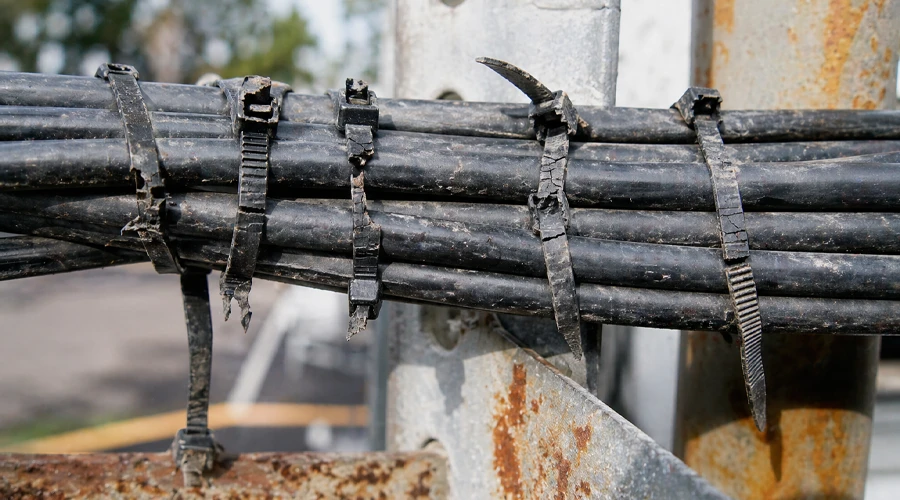
Saltwater doesn’t negotiate—it corrodes everything.
In marine cable securing systems and offshore platform wiring, fasteners must withstand continuous exposure to salt spray and humidity. Plastic-coated steel ties provide a protective barrier while maintaining structural strength.
You’ll often see them used in:
Chemical exposure is a silent destroyer.
Facilities handling acids, solvents, or reactive materials rely on corrosion-resistant cable fastening systems to avoid unexpected failures. In these settings, coated metal ties resist both chemical attack and mechanical stress.
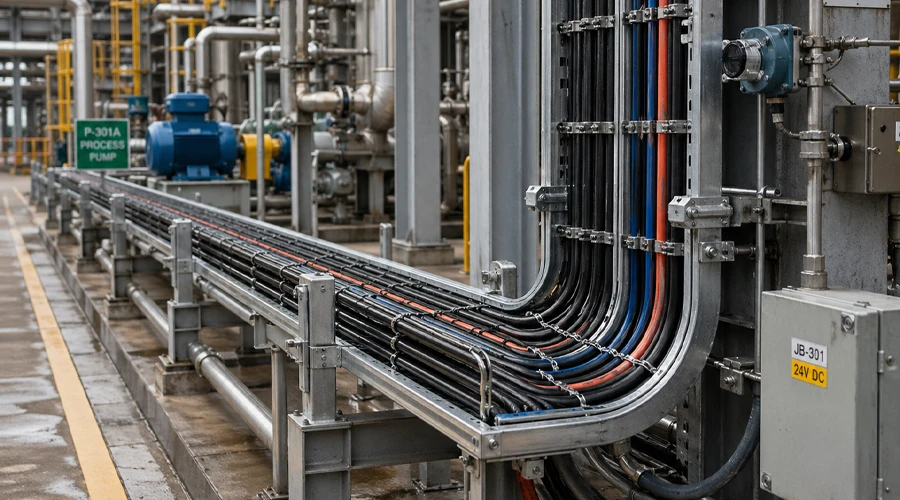
For engineers evaluating solutions, it’s worth taking a closer look at getting selection guidance when matching materials to specific chemical environments.
Heat changes everything.
In environments such as:
Standard nylon ties can soften or deform. By contrast, heat-resistant cable management solutions based on metal cores maintain their integrity.
This is particularly critical in industrial wiring harness protection, where failure could lead to downtime—or worse.
Urban infrastructure faces constant environmental stress.
Applications like:
require long lifespan outdoor fastening solutions that can endure UV, wind, and vibration over years, not months.
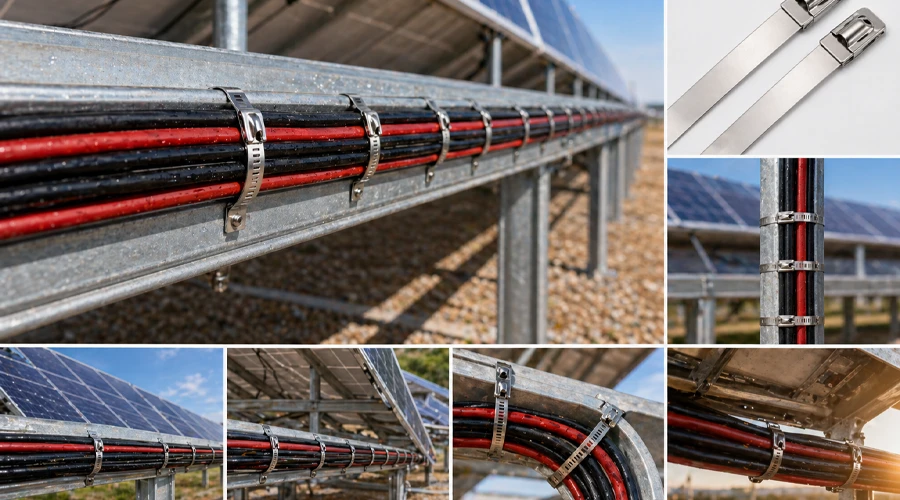
Here’s where many buyers hesitate.
Yes, reinforced ties cost more upfront. But lifecycle cost tells a different story. Frequent replacement of low-grade ties increases labor, downtime, and risk—costs that rarely appear on initial invoices.
This is why procurement teams increasingly prioritize:
Let’s break it down from a practical perspective:
Nylon cable ties
Uncoated stainless steel ties
Coated steel alternatives
This is where Stainless Steel Plastic Coated Cable Ties quietly become the preferred solution in many demanding scenarios. They combine the mechanical strength of steel with a protective outer layer, making them suitable for both durability and cable safety.
If you’re comparing specifications or planning procurement, you can explore technical details to better understand load ratings and coating options.
A maintenance engineer once described a recurring issue in a coastal facility: cable ties snapping every six months due to salt exposure.
Switching to coated steel ties eliminated the problem—not because the system changed, but because the weakest component was upgraded.
It’s a reminder that in engineering, small components often carry disproportionate importance.
Not all installations are equal.
Suppliers like ETL often provide tailored options, including:
This flexibility is especially valuable in custom cable management solutions for industrial projects, where off-the-shelf products don’t always fit.
To align specifications with your project, you may want to check available options before finalizing procurement.
Most buyers don’t choose the wrong product—they choose the familiar one.
But environments evolve, and so should material decisions.
If your application involves extreme weather cable fastening, industrial durability requirements, or long-term outdoor installations, upgrading your fastening system isn’t an upgrade—it’s a correction.


 中文
中文 English
 Pусский
 Français
 Español