The inspection report landed on Jake’s desk at 7:15 a.m. It wasn’t the news he wanted. Another offshore platform cable tray had been flagged for corroded fasteners, some snapping with light finger pressure. The previous replacement cycle was supposed to last five years. It had been fourteen months.
Jake’s situation isn’t unusual. Walk through any coastal processing plant, water treatment facility, or solar farm after a few seasons, and you’ll spot the same telltale signs: rust bloom around fastening points, cracked locking heads, and UV-degraded straps that shatter when repositioned. The common denominator? Standard nylon ties or basic 304-grade metal fasteners pressed into service where the environment demands more.
The real question isn’t whether corrosion will happen, but how fast—and what it costs when it does.
To understand why some fasteners fail prematurely, it helps to zoom in on what’s actually happening at the surface. Most general-purpose ties fall into two camps:
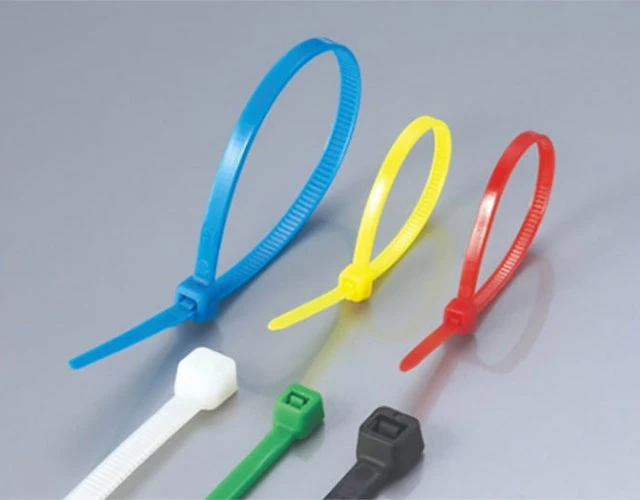
Nylon 6/6 – Excellent tensile strength indoors. But its Achilles’ heel is moisture absorption. Nylon draws in water, which plasticises the polymer and reduces strength by 15-30% in saturated conditions. Add UV exposure, and the molecular chains begin breaking; the tie becomes brittle, chalky, and eventually snaps under mechanical load.
304 stainless steel – The workhorse of the stainless family. With roughly 18% chromium and 8% nickel, 304 resists oxidation in many environments. However, chloride ions (think seawater, de-icing salts, chemical mists) attack the passive chromium oxide layer, initiating pitting and crevice corrosion. Once pits form, they propagate rapidly, often hidden inside the locking mechanism where oxygen is depleted. A fastener that looks sound externally may be paper-thin internally.
These failure modes aren’t theoretical. A 2022 NACE International study estimated that corrosion-related maintenance costs the global industry $2.5 trillion annually, with fasteners representing a disproportionate share of unscheduled interventions. It’s not the tie that costs money; it’s the unplanned downtime when it gives way.
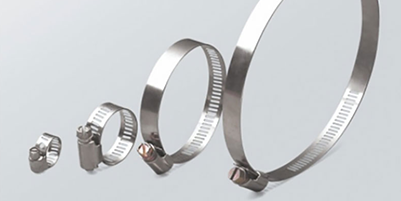
When engineers specify a fastening solution for aggressive environments, molybdenum becomes the decisive alloying element. Type 316 stainless steel contains 2-3% molybdenum, which fundamentally alters the material’s relationship with chlorides and acids.
The table below frames the practical differences in terms that matter on-site.
| Environment Factor | Nylon 6/6 Tie | 304 Stainless Tie | 316 Stainless Tie |
|---|---|---|---|
| Chloride resistance | Unaffected by chlorides, but loses mechanical integrity via moisture ingress | Pitting begins ~50 ppm chloride; fails quickly above 200 ppm | Resists sustained exposure >1000 ppm (seawater ~19,000 ppm) |
| UV tolerance (5-year outdoor) | Significant embrittlement; typical retention <40% tensile | Excellent; no UV degradation | Excellent; no UV degradation |
| Operating temperature range | -40°C to 85°C (softens near upper limit) | -80°C to 500°C+ | -80°C to 500°C+ |
| Acid environment (pH 2-4) | Variable; strong acids cause rapid degradation | Moderate resistance to mild acids; attacked by sulphuric, hydrochloric | Good resistance to sulphuric, phosphoric, and many organic acids |
| Typical service life offshore | 6-18 months | 2-5 years (risk of hidden pitting) | 15-25+ years |
| Relative lifetime cost | Low upfront, high replacement labour | Medium upfront, medium lifecycle | Higher upfront, lowest total cost |
Data synthesised from ISO 9227 salt spray testing protocols, ASTM A240 material specifications, and published field durability reports.
This comparison makes one thing clear: in installations where access is difficult, safety is paramount, or shutdown windows are expensive, the upfront material choice dictates the entire lifecycle economics.
Some applications are truly unforgiving. Here are three scenarios where upgrading pays back exponentially:
1. Offshore and Marine Environments
Whether it’s cable management on a wind turbine transition piece or securing umbilicals on an FPSO vessel, airborne salt mist and occasional immersion are constants. 316 stainless fasteners maintain their locking integrity decades after nylon has crumbled and 304 has developed stress corrosion cracks at the ball-lock indent.
2. Chemical Processing and Water Treatment
Sodium hypochlorite, sulphur compounds, and acidic cleaning regimens create microclimates that chew through standard metals. The molybdenum in 316 stainless steel reacts with these compounds to form a more stable passive layer, reducing the risk of localised attack in vapour spaces and submerged zones.
3. High-Temperature Industrial
Exhaust wraps, furnace cabling, and steam trace lines operate where polymers simply cannot survive. A metallic fastener that retains 80% of its room-temperature tensile strength at 400°C keeps critical systems bundled when it matters most.
Even when installers select a 316-grade strap, they sometimes overlook the locking mechanism. Some economy products use a 316 band but pair it with a 304 ball bearing or a plastic locking insert, creating a galvanic couple or a low-durability point. The result? The tie body lasts, but the head fails. When evaluating options, ask suppliers directly: “Is the entire fastener assembly—body, ball bearing, and locking geometry—manufactured from a single 316 heat?” Consistency matters.
A second detail is the edge profile. Laser-cut or fully rounded edges reduce the risk of cutting into cable jackets during thermal cycling, a detail that separates premium from commodity fasteners. If you've ever traced an arc fault back to a nicked insulation point caused by a sharp tie edge, you know this isn't a minor consideration.
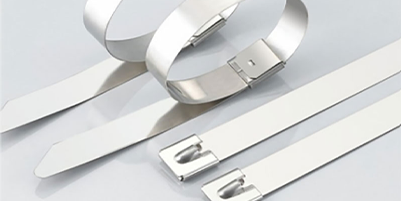
The specification mindset that serves most teams well is to stop treating fastening consumables as commodity MRO items and start viewing them as engineered components in a system. A cable tie that fails costs far more than the tie—it risks arc flashes, dropped objects, process line shutdowns, and worker safety incidents. Those costs dwarf any per-unit savings.
For teams currently writing maintenance specs or designing new installations, a practical step is to run a small-scale comparison: install sample lots of your current fastener alongside 316-grade alternatives at your most challenging locations. Measure pull-out force after 6, 12, and 24 months. The data will almost certainly redirect your procurement standard.
If you're ready to explore a purpose-engineered option that carries full 316 material certification and consistent performance in chloride-heavy environments, ETL’s 316 stainless fastening range provides traceable mill certifications and a fully metallic locking system designed to outlast the installation it secures.
Material certs: Request an EN 10204 3.1 or equivalent material certificate confirming 316/1.4401 grade.
Third-party testing: Look for salt spray test results per ASTM B117 (typically 1,000+ hours for premium products).
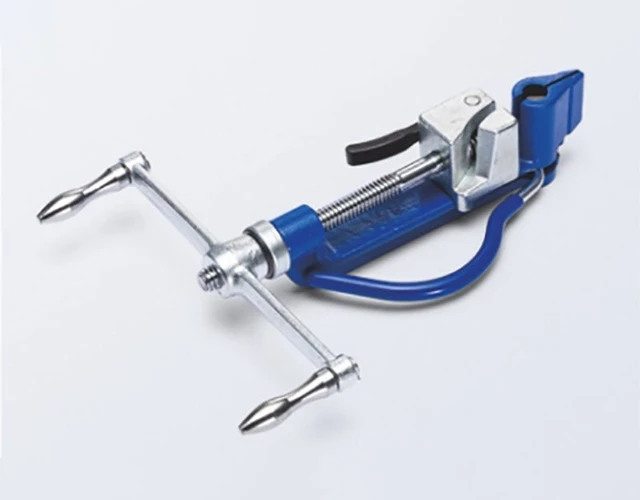
Installation tooling: Confirm whether manual tensioning tools or pneumatic guns are required and factor that into the total deployment cost.
Batch traceability: For safety-critical applications, heat-level traceability back to the mill ensures you can audit the material’s pedigree.
Corrosion isn't a mysterious force. It follows predictable electrochemical rules. When you select a material that can handle the specific ions present in your operating environment, you stop playing a losing game of replacement and start designing for the life of the asset. For Jake and many engineers like him, that single specification change turned an early-morning inspection crisis into a non-event—year after year.
References & Disclaimers
NACE International (now AMPP), International Measures of Prevention, Application, and Economics of Corrosion Technologies Study, 2022.
ASTM A240 / A240M Standard Specification for Chromium and Chromium-Nickel Stainless Steel.
ISO 9227:2022 Corrosion tests in artificial atmospheres — Salt spray tests.
Performance data cited in the comparison table is illustrative and based on publicly available technical literature; actual service life varies by installation conditions.


 中文
中文 English
 Pусский
 Français
 Español