Why Nylon Cable Ties Become Brittle in Winter
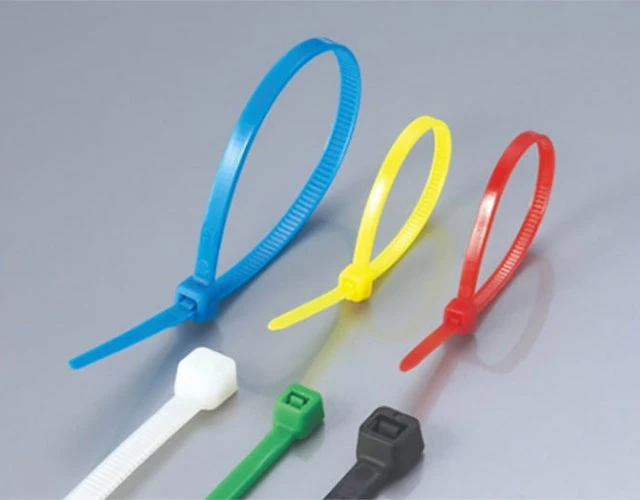
It's a common observation: plastic products, including standard nylon cable ties, become brittle and prone to failure in cold weather. The scientific reason lies in the behavior of polymer molecules.
Plastics are composed of long-chain molecules. At high temperatures, these molecules move freely, allowing the material to flex and absorb impact. However, in low winter temperatures, molecular movement slows down significantly. When an external force is applied, this restricted movement prevents the stress from being evenly distributed or dissipated through molecular friction. This leads to stress concentration at specific points. Once the internal stress exceeds a critical level, the polymer chains fracture, initiating cracks that rapidly propagate and cause the material to snap.
The Breakthrough: Mitigating Winter Brittleness
A proven method to enhance the low-temperature performance of nylon cable ties involves precise moisture control during manufacturing. Injecting a small, carefully measured amount of moisture into the material can act as an internal plasticizer. This helps to maintain molecular mobility at lower temperatures, reducing the risk of brittle fracture.
Important Note: This is a controlled industrial process. For end-users, the key is to source cable ties from manufacturers like ETL, who understand and implement these advanced material science principles to ensure product reliability year-round.
At ETL, we engineer our nylon cable ties to withstand seasonal challenges. By mastering the material composition and production process, we deliver products that offer superior tensile strength and durability, even in demanding cold-weather applications.


 中文
中文 English
 Pусский
 Français
 Español