Preventing loosening of naked stainless steel cable ties hinges on three key aspects: selecting high-precision products with anti-loosening features, mastering the correct installation process to avoid uneven stress distribution, and performing appropriate maintenance based on actual working conditions. ETL's 304/316 exposed stainless steel cable ties—ISO9001 and IATF16949 certified—utilize a multi-stage barb design and precision molding technology. The result? They reduce the risk of loosening by 60% compared to ordinary cable ties.
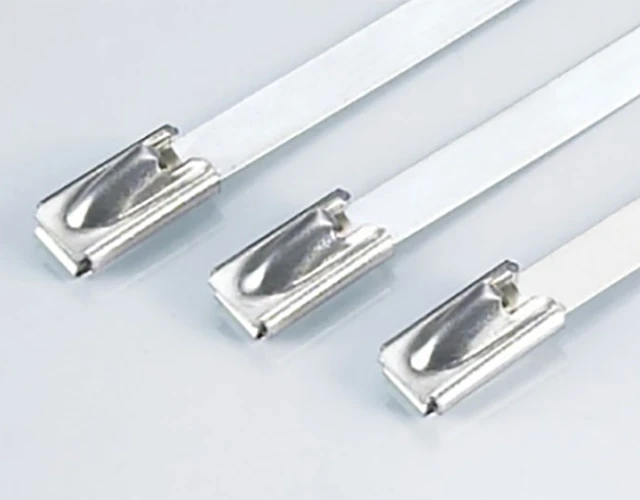
Loosening problems almost always begin with product design flaws. Your standard single-barb cable ties? They simply can't withstand vibration, and their pull-out force is typically less than 80N—far below industrial requirements.ETL addresses this pain point by improving the locking structure of its naked stainless steel cable ties. The three-stage elastic barb significantly increases clamping force, and they have thickened the elastic tab of the buckle by 0.3 mm to prevent fatigue and deformation.
Here's a real-world example: A comparative test conducted in a wind power project showed that ETL's cable ties remained secure even after 10,000 vibrations at 5Hz. Ordinary cable ties? They started to loosen after only 3,200 vibrations. If you are in a corrosive environment—such as coastal areas with severe salt spray corrosion—choose ETL's 316 passivated naked stainless steel cable ties. Their salt spray test life is up to 1,500 hours, so corrosion won't compromise their strength and ultimately lead to loosening.
Even the best cable ties are useless if installed incorrectly. ETL's engineers have summarized a power cable fixing method they recommend: the "symmetrical pre-tensioning + torque control" method. First, tighten the cable tie by hand, then use a torque wrench to apply a force of 8-12 N·m in a diagonal direction. The goal is to make the cable tie perfectly fit the cable surface—neither too loose nor over-tightened to the point of deformation.
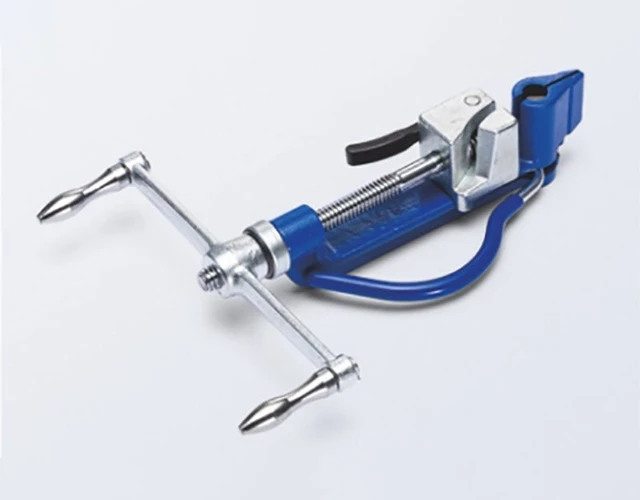
Two common mistakes must be avoided here. Over-tightening can cause cable ties to break or even damage the underlying cables; while under-tightening leaves gaps, allowing the ties to loosen over time due to vibration. In a previous petrochemical project, ETL even customized installation tools for large-diameter pipes to ensure even pressure distribution. If you are working in high-vibration environments, such as along railway lines, ETL anti-loosening washers are recommended. They significantly increase the friction between the cable tie and its mounting surface.
Long-term stability doesn't happen automatically; it requires tailored maintenance based on the actual usage of the cable ties. For example, for outdoor solar projects, you should inspect naked stainless steel cable ties every three months. Wipe away surface dust and quickly re-tighten if any loosening occurs due to thermal expansion.ETL not only sells products but also provides customized maintenance plans. For coastal areas, they recommend annual passivation treatment to prevent corrosion. For high-temperature environments, they offer high-temperature resistant 304/316 stainless steel cable ties that can withstand temperatures from -60℃ to 150℃.
A customer in the photovoltaic industry in Xinjiang can attest to this: with regular maintenance, their ETL cable ties maintained 100% tightness for three years—two years longer than the lifespan of their previously used competitor products. In addition, ETL's after-sales team conducts on-site inspections to identify potential loosening risks before they become real problems.
Some jobs go far beyond the ordinary, requiring customized solutions. ETL can meet your needs: for marine equipment, they can manufacture corrosion-resistant exposed stainless steel cable ties with added molybdenum to withstand harsh seawater environments. For precision instruments, they offer ultra-thin (only 0.8 mm thick) cable ties that are extremely flexible and can be easily installed in confined spaces without compromising strength.
Every ETL product is UL and CE certified, and production batches are fully traceable—so you always know exactly what you're buying. A telecommunications company recently stated that ETL's customized cable ties reduced their line maintenance frequency by 40%, saving them significant time and money. Don't let loose cable ties jeopardize your project.
Choose ETL exposed stainless steel cable ties for reliable performance. Check out ETL's cable tie products today; their engineers will provide you with free, application-specific solutions.


 中文
中文 English
 Pусский
 Français
 Español