The morning inspection revealed a sight that made the maintenance supervisor’s stomach sink. A bundle of critical control cables, installed just eighteen months prior, now hung by a thread—the plastic ties had grown brittle and shattered. Beneath the gangway, a stainless steel ladder bracket showed streaks of ominous brown tea-staining, its standard-grade fasteners weeping rust into the surrounding structure. This isn’t a scene from an engineering disaster movie; it’s a Tuesday in any coastal facility where material choice wasn't prioritized. The ocean is an unforgiving auditor, and it never stops billing for the crime of inadequate material specification.
Corrosion carries a silent but staggering price tag. According to a NACE International study, the global cost of corrosion is estimated at US$2.5 trillion, translating to roughly 3.4% of the global GDP. In industries like offshore wind, maritime logistics, and petrochemical processing, a significant fraction of this is attributable not to operational failure, but to the selection of the wrong fastener for the environment. The failure isn’t merely about the fasteners themselves, but about what they protect—the sensor cables, the safety harness anchor points, the hydraulic lines.
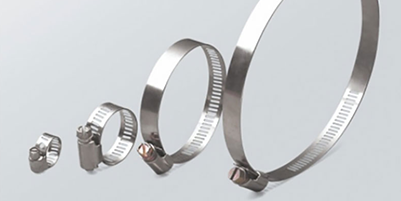
The term "stainless steel" is often treated as a monolithic guarantee, a misconception that yields expensive consequences. The vulnerability lies in chloride-induced stress corrosion cracking and pitting. Standard 304 stainless, the workhorse of the industry, contains 18% chromium and 8% nickel. While robust in many contexts, its molecular structure is aggressively attacked by chlorides—the primary salt component in seawater and even airborne sea spray.
The mechanism is insidious. Chloride ions breach the passive chromium oxide layer that protects the steel, creating microscopic pits. Under tensile stress, these pits become crack initiation sites. The component often fails with little to no warning, retaining its shiny appearance right up until catastrophic fracture. Engineers at NACE International have repeatedly documented that for applications involving continuous or intermittent chloride exposure, a different chemical armor is required. This is where the jump to a molybdenum-bearing alloy isn't just an upgrade; it’s a functional necessity.
The addition of 2-3% molybdenum to the iron-chromium-nickel matrix fundamentally alters the material's behavior in chloride environments. This is the defining characteristic of the 316 family. Molybdenum works by enhancing the repassivation kinetics—essentially, it allows the protective oxide layer to repair itself far more quickly when attacked by chlorides.
To standardize this, the ASTM A240/A240M specification defines the chemical requirements for 316 stainless steel, demanding a molybdenum content of 2.00-3.00%. A fastener marketed as "marine grade" that lacks a verifiable material cert (mill test report) confirming this chemistry is effectively a ticking clock. It’s not merely about slowing down corrosion; it’s about preventing the pitting that leads to systemic component failure. For installations where inspection is infrequent or access is difficult—think atop a wind turbine monopile or within a submerged cable conduit—the alloy composition is the sole long-term integrity guarantee.
When moving beyond generic plastic or coated ferrous ties, the selection criterion shifts to environmental resistance versus mechanical requirements. The table below provides a decision-making matrix based on real-world performance data.
| Fastener Material | Chloride Resistance | Operating Temp. Range | Typical Tensile Strength | Lifecycle Cost (Relative) | Ideal Application Scenario |
| Nylon 6/6 (UV-stabilized) | Excellent (inert) | -40°F to 185°F | Low (50-75 lbs) | Low (Frequent Replacement) | Temporary bundling; indoor control panels; no-load marking |
| 304 Stainless Steel | Poor (Pitting risk) | -100°F to 1000°F | High (100-200 lbs) | Medium-High (Premature failure risk) | Food-grade interiors; urban architectural fixtures; mild chemical washdown |
| 316 Stainless Steel | Excellent | -100°F to 1000°F | High (100-200 lbs) | Low (Install & Forget) | Offshore platforms; coastal railways; chemical processing pipes; desalination |
| PEEK (Polyether ether ketone) | Excellent (inert) | Up to 500°F | Medium (80-120 lbs) | High (Material cost) | Semiconductor; high-purity chemical; aerospace (weight-sensitive areas) |
Note: Tensile strengths vary by manufacturer geometry. Environmental data sourced from metallurgical corrosion resistance guides.
The matrix makes the decision clear for any application where physical security and corrosion resistance are non-negotiable. The PEEK solution, while chemically pure, cannot match the mechanical robustness required for heavy-duty bundling. The traditional nylon option, though initially cheap, becomes the most expensive choice when factoring in the labor for scheduled replacement in hazardous areas. For a solution that bridges mechanical strength and chemical immunity in a saline environment, the 316 stainless option becomes the logical, often only, default. For engineers seeking a heavy-duty fastening solution for corrosive chemical environments, verifying the alloy composition is the first and most critical step.
Even a premium alloy tie fails if installed incorrectly. The primary failure mode during installation of these types of ties is galling—a cold-welding effect where the microscopic asperities on the metal surfaces bond under pressure, causing the tie to seize before reaching target tension. This is not a material defect; it is a friction management issue.
Here is the field-proven technique for a secure, lifelong lock:
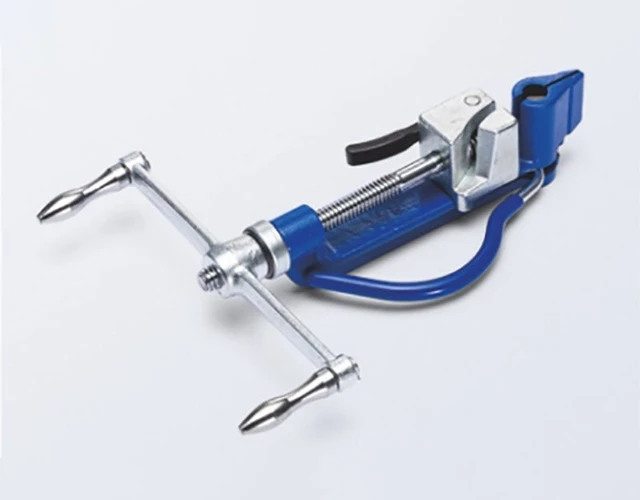
Manual Tensioning is King: Pneumatic tensioning tools, unless precisely calibrated for this specific metal hardness, can over-speed the locking mechanism, generating excessive heat and inducing galling. A manual tensioning tool provides the tactile feedback necessary to feel the lock engagement.
Consistent Perpendicular Pull: Approach the lock head at a consistent, flat 90-degree angle. Off-axis tension twists the strap inside the head, concentrating stress on one side of the ball-bearing locking mechanism and reducing effective strength by up to 40%.
The "Two-Click" Rule: Listen for two distinct metallic clicks as the ball bearing seats into the serrations. A single click often indicates a false lock.
Trim and Protect: Never twist the tail to break it. Twisting imparts a rotational stress that can micro-fracture the tie head. Always use a tool that produces a clean, flush cut to leave a safe, burr-free edge that won’t snag cable jackets or gloves.
A common error in the field is lubricating the tie to prevent galling. Never use grease or spray lubricants on a tie installed outdoors; they trap abrasive particles and, in chemical plants, can react with process fluids. If galling persists, reduce the application speed, not the friction.
Procurement managers fixated on unit cost often miss the reliability dividend. A fastener that costs $2.00 but requires a shutdown for access to replace a failed unit has a true cost that is orders of magnitude higher. The reliability dividend is the inverse—the money saved by not having an unplanned outage, not experiencing a safety incident from a fallen cable, and not deploying a crew for reactive maintenance.
This is why high-reliability industries are moving towards a specification-driven procurement model rather than a cost-driven one. If you are engineering a system where maintenance access is prohibitive, upgrading to a marine-grade fastening solution designed for long-term outdoor exposure transitions from a project expense to an operational insurance policy. The "fit and forget" nature isn't a marketing slogan; it’s a material science calculation.
In environments ranging from the salty air of the North Sea wind farms to the chemical-laden atmosphere of a wastewater treatment plant, the specification of a 316-grade alloy is a quantitative risk-reduction measure. The material’s resistance to intergranular corrosion also allows it to be used in high-temperature washdown cycles without sensitization—a dual advantage you won't find in heat-stabilized polymers.
To implement this in your next project, avoid the generic line item "cable ties." Instead, write a performance spec that demands:
Material Certification: Mandatory mill test reports per ASTM A240 for every batch.
Alloy Verification: Spot-test identification using X-ray fluorescence (XRF) analyzers on receipt to confirm molybdenum presence, ruling out substituted 304 stock.
Installation Standard: A clear SOP that mandates manual tensioning with calibrated tools and prohibits tail twisting.
This traceability is the final layer of the EEAT framework. It’s verifiable, documentable, and defensible. The sustainability angle also becomes apparent here; eliminating a cycle of plastic tie replacements reduces polymer waste and the carbon footprint of maintenance visits. In an era where ESG metrics influence vendor selection, metal ties that last the life of the asset are a defensibly greener choice.
The battle against corrosion is waged not in the maintenance bay, but at the engineer’s desk during the specifying phase. By insisting on the correct molybdenum-bearing alloy, verifying the material’s chemistry, and adhering to proper installation mechanics, you shift from reactive firefighting to predictable asset integrity. If you want to move beyond generic specifications and see how a precisely engineered solution performs in your specific load condition, you can get a sample and review the technical data sheet here.
Ultimately, the goal isn't just to buy a better tie—it's to engineer out the failure point entirely. When you consider the cost of corrosion—not in terms of fasteners, but in terms of downtime, reputation, and safety—the choice of alloy becomes the simplest decision in the project workflow.
References & Further Reading:
NACE International, "International Measures of Prevention, Application, and Economics of Corrosion Technologies Study," 2016.
ASTM International, ASTM A240/A240M-23a, "Standard Specification for Chromium and Chromium-Nickel Stainless Steel Plate, Sheet, and Strip for Pressure Vessels and for General Applications."
BSSA (British Stainless Steel Association), "Selection of stainless steels for handling chlorine (Cl2) and chlorine dioxide (ClO2)."
Disclaimer: This article offers general engineering guidance and should not replace a formal materials review by a qualified engineer for safety-critical applications.


 中文
中文 English
 Pусский
 Français
 Español