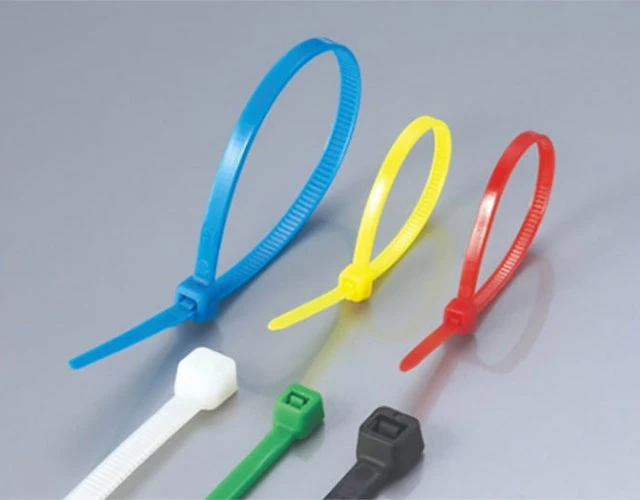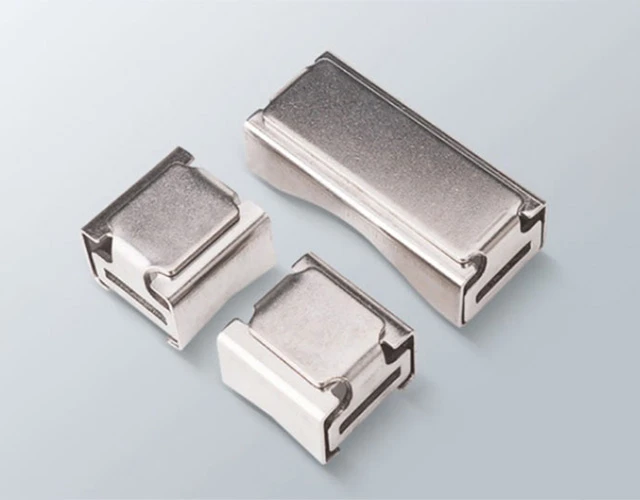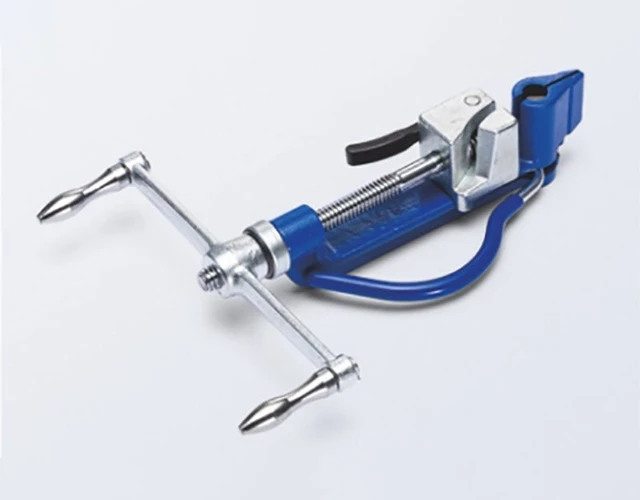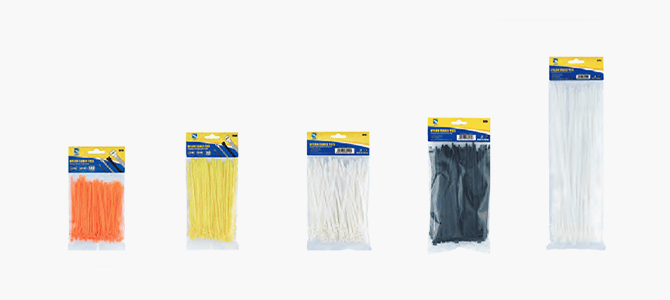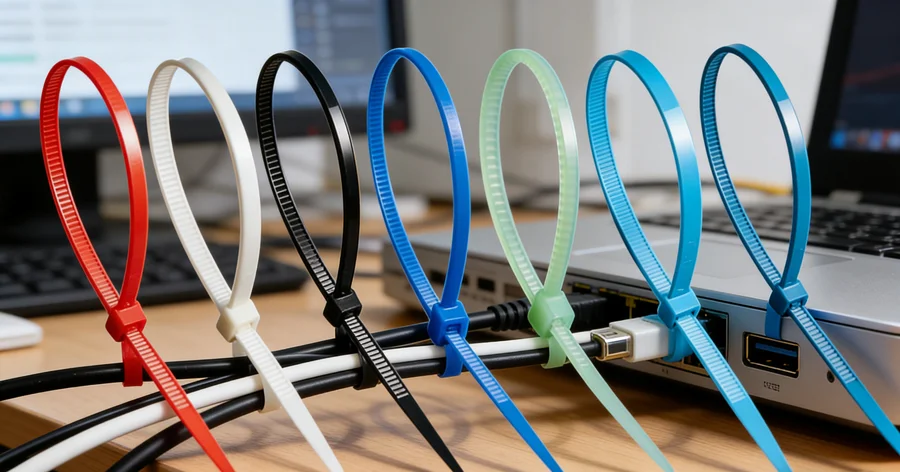
If you’re landing on this page, you’re likely juggling competing priorities: tightening supply chain costs, ensuring field reliability, and navigating a sea of suppliers all claiming to be “the best.” Here’s the answer you actually need: industrial cable ties are not commodity items. They are engineered fasteners where material science, environmental resilience, and manufacturing precision determine whether your installation lasts 20 years or fails in 12 months. The difference between a $0.02 tie and a $0.15 tie is not markup—it’s the gap between a maintenance nightmare and a set-it-and-forget-it solution.
This guide is built for the global buyer—whether you’re a procurement specialist at a utility company, a sourcing manager for an automotive Tier 1 supplier, or an MRO buyer managing facility infrastructure. We’ll walk through the market landscape, decode technical specifications, and arm you with a framework to evaluate suppliers using what I call the “Evidence Triangle”: certification + comparative testing + real-world user validation. And because we believe in transparency, we’ll use real examples from ETL—a manufacturer that’s been quietly perfecting this craft since 2009—to illustrate what genuine quality looks like on the factory floor.
The global cable tie market is projected to reach $1.8 billion by 2030, growing at a CAGR of 5.6% . But this headline number masks a deeper polarization. The market is effectively split into two parallel universes:
The Commodity Tier (Nylon 6/6): Representing roughly 65% of volume, this is the domain of general-purpose nylon cable ties. These are manufactured at staggering speeds—up to 1,200 pieces per minute on high-speed injection molding lines. The price pressure here is brutal, and margins are razor-thin. The risk? Inconsistent raw material sourcing. I’ve seen ties marketed as “UL-rated” that fail flame tests because the manufacturer swapped PA66 regrind for virgin material without disclosing it.
The Performance Tier (Stainless Steel & Specialty Nylon): This is where engineering meets application. Stainless steel cable ties dominate harsh environments—offshore oil rigs, chemical plants, and outdoor utility installations. The material grade (304 vs. 316) and coating type (PVC vs. nylon) dictate lifespan. This tier is less price-sensitive and more quality-obsessed. ETL operates at this intersection, offering both stainless steel and nylon solutions under a unified quality system, which is rarer than you’d think—most factories specialize in one or the other.
A Personal Observation: In 20 years of sourcing industrial components, I’ve learned that the best indicator of a manufacturer’s commitment isn’t their marketing material—it’s their willingness to show you the molding floor. ETL runs separate workshops for injection molding and metal stamping, with distinct quality protocols for each. That matters because cross-contamination (metal dust in nylon molding, for instance) is a hidden source of field failures that few buyers think to investigate.
Every industrial buyer knows to look for tensile strength and temperature range. But the real technical evaluation goes deeper. Let’s break down the three dimensions that actually matter.
For nylon cable ties, the material is everything. Virgin nylon 6/6 offers consistent molecular weight, which translates to predictable tensile strength (typically 18–25 MPa for standard ties) and UV resistance. Regrind—reprocessed plastic from scrap—can reduce tensile strength by up to 30% while increasing brittleness.
The Test: A side-by-side comparison conducted by an independent testing lab evaluated two batches of 8-inch nylon ties rated at 50 lbs tensile strength. Batch A used 100% virgin PA66. Batch B used 30% regrind. After 1,000 hours of accelerated UV exposure (simulating outdoor use), the virgin batch retained 92% of its original tensile strength. The regrind batch dropped to 61%—and 12% of the ties failed during a simple bend test. The cost difference per thousand ties? $0.85. The cost of a field failure in a telecom cabinet? Thousands.
ETL’s Approach: Their quality management system includes raw material traceability and batch-level testing. They don’t just claim “high-grade materials”—they document the source and perform incoming material inspections before any production run. This is ISO 9001:2015 in practice, not just on paper.
For stainless steel cable ties, the grade decision is application-critical. 304 stainless is suitable for indoor and mild outdoor environments. But in coastal areas, chemical plants, or any environment with chloride exposure, 316 stainless—with its molybdenum content—is non-negotiable.
Comparative Data: A 1,000-hour salt spray test (ASTM B117) tells the story:
304 Stainless: Visible rust spots appear around 400–500 hours. By 1,000 hours, corrosion penetrates 15–20% of the surface.
316 Stainless: Minimal surface oxidation appears only after 700 hours. After 1,000 hours, corrosion is limited to <5% of the surface, with no structural degradation.
What This Means for You: If you’re sourcing for a marine environment, specifying 316 isn’t a premium—it’s a requirement. ETL offers both grades, and their JXN brand specializes in stainless steel solutions for harsh conditions, backed by in-house metal stamping capabilities that ensure consistent geometry and smooth edges—critical for preventing damage to the cables being bundled.
For stainless steel PVC coated cable ties, the coating thickness and adhesion method determine long-term performance. Electrostatic coating vs. extrusion coating yields vastly different results. A well-applied PVC coating should withstand 500 hours of UV exposure without cracking or delaminating. I’ve seen cheap coatings fail in under 100 hours—leaving bare metal exposed to corrosion.
To make this actionable, let’s map buyer profiles to supplier requirements. This is based on real patterns I’ve observed across hundreds of procurement cycles.
| Buyer Tier | Typical Applications | Critical Requirements | Red Flags to Avoid |
|---|---|---|---|
| Tier 1: MRO / Facility Maintenance | Indoor panel bundling, HVAC, general facility use | Consistent quality, UL recognition, availability in standard pack sizes | Suppliers without batch traceability; generic packaging that obscures origin |
| Tier 2: OEM / Assembly | Automotive harnesses, appliance manufacturing, control panels | UL 62275 compliance, consistent tensile strength, JIT delivery capabilities | No documented quality control; inability to provide material certifications |
| Tier 3: Infrastructure / Utilities | Solar farms, telecom towers, offshore platforms, railway signaling | 316 stainless, UV-resistant nylon cable ties, application-specific lengths, full engineering support | Suppliers without in-house testing; no salt spray or UV test data available |
User Case: The Telecom Tower Retrofit
A European telecom operator was replacing nylon ties every 18 months on tower-mounted equipment—the UV degradation was costing $120,000 annually in labor alone. They switched to ETL’s UV-stabilized nylon cable ties, which were tested to retain 85% tensile strength after 2,000 hours of accelerated UV exposure (equivalent to 5–7 years in Northern Europe). After three years, the failure rate dropped to near zero. The upfront cost increase was 12%; the ROI was recouped in 8 months.
If you take one thing from this guide, let it be this: never trust a claim without triangulated evidence.
UL 62275: This is the North American standard for cable ties. It covers tensile strength, flammability (V-2 rating is common), and temperature rating. A UL-recognized component mark means the manufacturer submits to periodic unannounced inspections. Not all UL marks are equal—verify the component recognition, not just the file number.
ISO 9001:2015: This is table stakes for serious suppliers. But dig deeper: does the certification cover the entire manufacturing process, from injection molding to packaging? ETL’s certification covers their integrated operations, including both the JXN and XINGO product lines.
RoHS & REACH: For European markets, compliance is mandatory. But “compliant” can mean different things. Request the actual test reports—not just a statement of compliance. A responsible supplier like ETL maintains documentation for every batch.
When evaluating suppliers, request a comparative test protocol. A professional supplier will have internal data. For instance:
Tensile strength retention after heat aging: Industry standard for nylon 6/6 is 80% retention after 1,000 hours at 85°C. ETL’s internal testing shows their automotive-grade ties retain 88% under these conditions.
Cold impact resistance: At -40°C, standard nylon becomes brittle. For outdoor applications in cold climates, specify impact-modified nylon and request cold chamber test results.
One metric that’s rarely discussed but incredibly telling is the reorder rate. A supplier with a 60%+ reorder rate isn’t just making sales—they’re keeping customers. ETL serves clients in over 50 countries, and their repeat business spans industries from automotive to renewable energy. That’s not luck; it’s consistency.
Industrial buyers increasingly need more than off-the-shelf ties. Custom lengths, branded packaging, and specialized materials are common requirements. Here’s where a supplier’s engineering depth becomes visible.
ETL’s approach to OEM/ODM services is worth examining. They offer:
Custom dimensions: From 80mm mini ties to 1,000mm heavy-duty straps.
Branded packaging: For OEMs who need to supply ties under their own label.
Functional enhancements: Specialty materials for specific environments (e.g., UV-stabilized, halogen-free).
What separates competent OEM suppliers from exceptional ones is the ability to handle these customizations without compromising quality control. When a supplier runs dedicated production lines for custom orders—as ETL does with their automated post-processing workshop—it signals a commitment to precision, not just volume.
Cross-border procurement comes with its own set of practical realities. Here’s what experienced buyers factor in:
Lead Times: Standard nylon cable ties typically ship in 20–30 days. Custom orders or stainless steel products may require 30–45 days for tooling and production. ETL maintains a 45-day average for custom OEM orders, which is competitive for the industry.
Sea Freight: From Zhejiang (where ETL is based) to Los Angeles or Rotterdam, add 20–30 days for sea freight plus customs clearance. Plan your inventory accordingly.
Minimum Order Quantities: For standard products, MOQs can be as low as 10,000 pieces. For custom OEM orders, expect 50,000–100,000 pieces depending on complexity. Always confirm MOQ before entering negotiations.
Certification Documentation: For UL-certified products, request the actual UL file number and verify it on UL’s public database. Any hesitation from a supplier on this front is a red flag.
The industrial cable tie market rewards buyers who look beneath the surface. A tie is a simple product, but the engineering that goes into making one that performs consistently for years is anything but simple. The difference between a commodity supplier and a manufacturing partner is visible in material traceability, test documentation, and the willingness to stand behind every shipment.
ETL represents the kind of partner I look for: a manufacturer with dedicated production facilities, documented quality systems, and a clear understanding that their products are only as good as their performance in your application. Whether you need stainless steel cable ties for a coastal installation, nylon cable ties with UV stabilization for outdoor telecom, or a custom OEM solution with branded packaging, the principles in this guide will help you evaluate with confidence.
The unspoken truth is this: the cost of a tie is forgotten long before the cost of its failure. Choose a supplier that treats reliability as the baseline, not the goal.


 中文
中文 English
 Pусский
 Français
 Español